A lot of people walk into a BLS CPR Instructor course thinking it’s just “CPR with a few more steps.” If you already know compressions and how to use an AED, teaching it shouldn’t be that hard – right?
In reality, strong CPR skills don’t automatically translate into strong teaching skills. A lot of candidates rely on their technical ability and assume that’s enough – but that mindset leads to common mistakes during both in person and online CPR instructor course in Dallas.
The good news? These common missteps are entirely preventable – once you know what to look out for. Keep reading to find out how.
-
Review the Latest BLS Guidelines
A lot of candidates assume their previous CPR certification is enough.
You may have taken BLS recently and feel confident in your skills – but AHA guidelines are always updated and trainers in a BLS CPR instructor course in Dallas expect you to know the latest details. That means compressing at 100 – 120 per minute, adult depth 2 – 2.4 inches, minimizing interruptions, switching compressors every two minutes, following clear team roles and using AEDs correctly.
If you rely on outdated knowledge, you risk teaching incorrect information, which can hurt your credibility as an instructor.
How to Avoid It
The key is to arrive at the course fully up to date with the latest BLS guidelines. Study the current provider manual thoroughly, paying close attention to compression rates, depth, ventilation ratios, AED use and the differences for adults, children and infants.
Knowing these details inside and out helps you teach confidently, explain steps clearly and answer all the questions correctly – without hesitation.
-
Focus on Your Teaching Skills, Not Just CPR Skills
Being good at CPR ≠ being good at teaching CPR
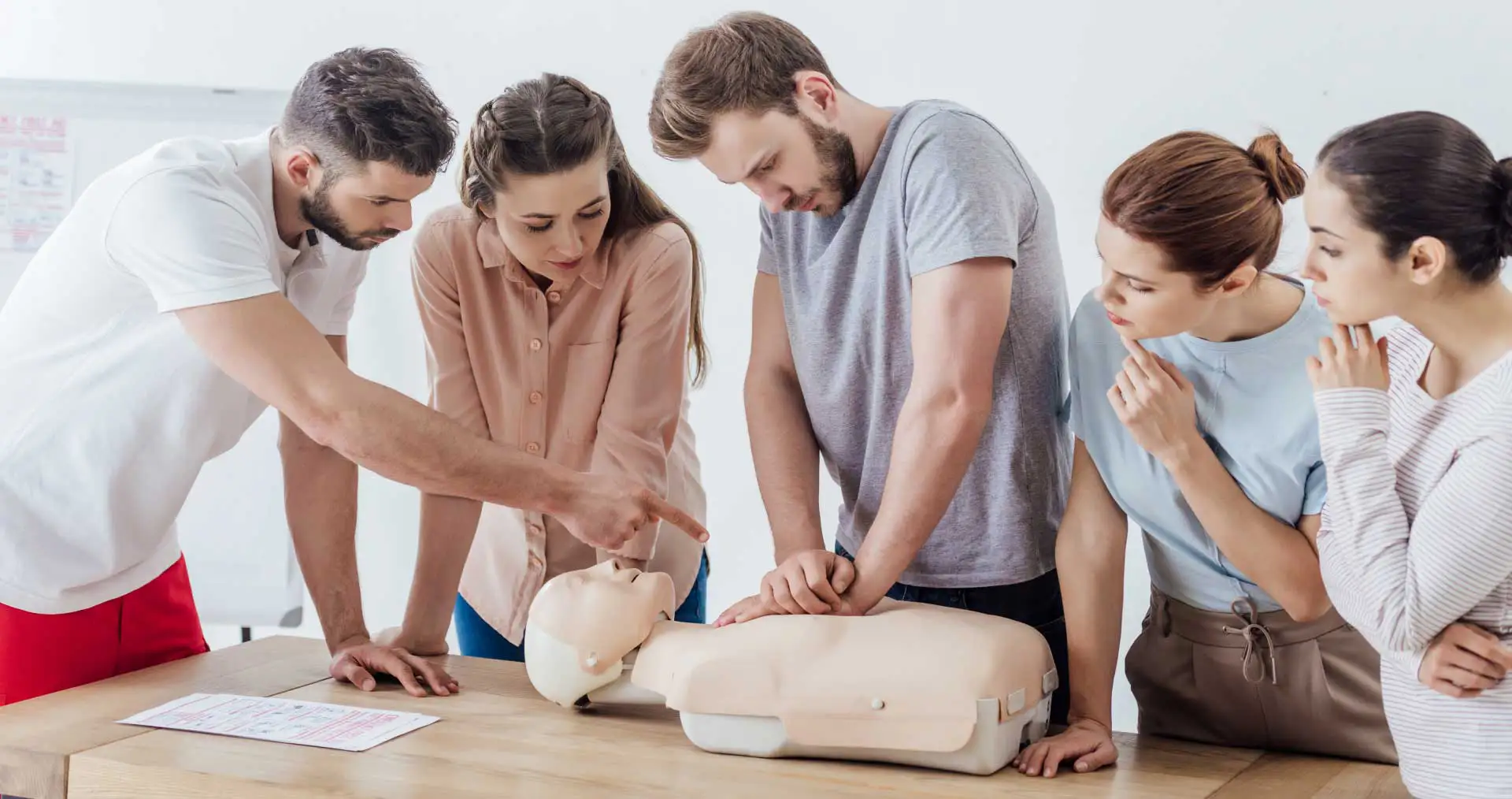
Becoming a BLS CPR instructor comes with two main responsibilities: knowing the skills and teaching them well. You can be great at compressions, yet if you can’t explain them clearly, your students simply won’t learn. In fact, research has shown that while up to 95 % of teachers feel confident in their subject knowledge, their ability to teach that content effectively isn’t always as strong.
That’s why the in person and online CPR instructor course in Dallas doesn’t merely focus on your CPR skills – but also tests how you break down the steps, guide groups, correct mistakes clearly and keep everything organized.
How to Avoid It
Start by working on how you explain CPR, not just how you perform it. Talk through each step out loud as if your “students” have never seen it before and pay attention to making your instructions simple and easy to follow.
You can also use a mirror to watch your hand placement, posture and gestures so you can spot anything that might confuse someone. The goal is to get comfortable translating your skills into clear, understandable teaching – because teaching well is just as important as knowing the technique.
Want to learn more about how a BLS Instructor certification is different from a standard BLS course? Read this guide 〜
-
Prepare Thoroughly for Skills Evaluation
Performing CPR on your own is one thing – doing it perfectly under the pressure of a test is another.
Instructor-level skills testing is harder than regular CPR skills testing. Even if you’re confident in your CPR skills, the pressure of a formal evaluation – having trainers watching every move, following strict checklists and performing under a time limit – can make you nervous. Because of this stress, many candidates rush compressions, go beyond the correct rate or forget steps.
How to Avoid It
Practice for both in person and online CPR instructor course in Dallas like you’re actually being tested. Run through full scenarios – keeping track of compression timing, ventilation technique and every step on the instructor checklist.
You can even try it with a friend or family member acting as a learner – so you get used to performing CPR while giving instructions to other people at the same time. This will train both your technical skills and your ability to manage a session under pressure – making the actual evaluation feel much more manageable.
-
Complete All Course Requirements Early
Skipping the necessary paperwork can derail your course before it even starts.
Some candidates arrive at the training center only to find they haven’t completed a requirement – like not having a current BLS certification, unfinished pre-course modules or missing paperwork. This is a big deal since most instructor programs clearly outline prerequisites – and missing even one can delay or block your certification.
Although this mistake has nothing to do with your competence – it can create unnecessary stress and throw off your confidence before the course even begins.
How to Avoid It
Check all your course requirements well ahead of time. Make sure your BLS provider certification is current and recognized and finish any assigned pre-course modules. Also, don’t forget to gather and submit paperwork like health forms or proof of prior CPR experience.
One easy way to stay on track is to set reminders in your phone or calendar so nothing slips through the cracks. Handling these things early allows you to show up relaxed and focus fully on learning during the course.
Wondering about when your BLS CPR certificate expires? Check out this blog 〜
-
Treat the Course as a Learning Experience – Not Just a Certificate
Getting the certificate is just the start – being ready to lead and teach is what really matters.
Many candidates approach the in person and online CPR instructor course in Dallas with a single goal: pass and get the certificate. While certification is certainly important, focusing only on passing can limit your growth. Instructor training is designed to build leadership, communication and evaluation skills – essential tools for training others effectively.
Ignoring feedback or aiming for the minimum standard might earn you the certification but it won’t make you fully confident. Remember, as an instructor, the quality of your teaching directly affects how prepared your students will be in real emergencies.
How to Avoid It
Shift your mindset from “passing” the course to “mastering the skills.” Pay attention to your trainers’ feedback and use it to sharpen both your CPR technique and your teaching. If something isn’t clear, don’t hesitate to ask questions and take the time to learn all the corrections thoroughly.
This turns the course into a great learning experience – making you confident, capable and ready to guide others in emergency situations.
The Difference a Good Training Institute Makes
Aside from following the tips above, enrolling in a reliable training institute also has a major impact on your overall experience with the BLS CPR instructor course in Dallas.
Here’s how the right institute can set you up for success:
Feature |
How a Good Training Center Helps |
| Up to Date Curriculum | They provide current manuals, updates and realistic practice scenarios. |
| Experienced Trainers | Trainers share real-life examples, give clear demos and offer practical tips. |
| Hands-on Practice | Full mock sessions and timed drills help you get comfortable performing and teaching CPR. |
| Clear Requirements | They explain prerequisites clearly and remind you about paperwork or pre-course modules. |
| Supportive Environment | Small groups, personal feedback and approachable instructors make learning smooth and enjoyable. |
The Bottom Line
The difference between simply passing and truly excelling as a CPR instructor comes down to your dedication, openness to feedback and mastering both the skills and the art of teaching. At CPR Training Center our experienced trainers understand the weight of that responsibility – guiding you not only to perform CPR correctly but also to help others respond confidently in critical moments.
Whether you’re taking your first in person or online CPR instructor course in Dallas – or updating your credentials, we make the process simple, hands-on and easy to follow.
Sign up for a class today!
FAQs
-
Can I get BLS certified online?
Yes, many providers like CPR Training Center offer blended courses with online theory and in-person skills testing. However hands-on practice is necessary to complete your certification.
-
Is it possible to fail BLS?
Yes. BLS includes a written test and a hands-on skills check. You need to score at least 80% (some providers accept 70%) and perform every skill correctly.
-
What is the most common reason CPR is unsuccessful?
CPR often fails when compressions are too slow or shallow, pauses are too long, breaths are overdone or shocks are given at the wrong time. These mistakes reduce the chances of survival – even when help arrives on time.
-
What is the difference between CPR and BLS?
CPR includes hands-on actions – like chest compressions and rescue breaths to keep a person alive. Whereas BLS goes further – by combining CPR with AED use, teamwork, airway management – and following official guidelines to give someone the best chance of survival.
-
Is it hard to be a CPR instructor?
Yes, it requires a lot of focus and practice. You need to master CPR, teach it clearly, guide students and give feedback. It’s demanding but the impact you make (helping others save lives) is priceless.