Hoping to save lives is one thing, while acting on your wish is another.
In the middle of ideating and implementing a cause as good as becoming a CPR instructor, you must think, “How long does it take to become one?”
While this question is increasingly common, its answer is quite simple: (1) a few days, or (2) a couple of weeks.
However, before proceeding with confirming your enrollment in any reputable CPR instructor trainer course in Dallas, you must know all the features of it.
Dive into the rest of the blog to gain further insight about this course.
The Purpose & Duration of a CPR Instructor Trainer Course In Dallas
Saving lives can look different to everyone. Sometimes, a little care and consideration can pull someone out of a dark place. Though on other times, serious medical emergencies require more than just your company or philosophy of life.
For this purpose, efficient CPR instructors are needed to train emerging CPR providers in the healthcare landscape of Dallas. Though committing yourself to the process of becoming an effective CPR trainer is demanding work.
Understanding the Purpose
When someone collapses right in front of you, unable to breathe or form a coherent sentence, you know that acting quickly no longer remains a choice. Not only that, but you also can’t risk making the wrong move to make their condition worse.
Thus, it’s mandatory for you to clear your thoughts and think more with logic, rather than emotions.
Instead of waiting for medical emergency services to arrive at the designated location, anyone can enroll in the basic course of BLS CPR provider and timely administer CPR to a victim.
However, in order for the general public of Dallas to become well-versed and, consequently, obtain proper training in CPR administration, one would always need a trained BLS CPR instructor to guide them through the initial phase of learning.
Average Duration for a CPR Instructor Trainer Course In Dallas
Depending on the fulfillment of your prerequisite requirements, the duration of a BLS CPR instructor course can vary anywhere from as low as 05 hours to a few days, extending to several weeks.
Prior to enrolling in a BLS CPR instructor course, proceed by having the right information. Keeping note of that, you need to make sure you follow this checklist to make the most out of your training.
1. Who You Should Be:
- Over the age of 21 years
- Experienced in providing BLS and CPR
- Certified from a reputable BLS CPR institution (with AHA or HSI)
- From the healthcare department / the fire department / corporate medical department / nursing school / pediatric care training department / fitness training department
2. What You Should Have:
- Proficiency in learning from online resources
- Affluence in BLS protocols
- Valid CPR Certification / BLS Certification / First Aid at Work Certification /
3. What You Should Look For
- Recognition by either the American Heart Association (AHA) or the Health Safety Institute (HSI)
- Availability of online resources
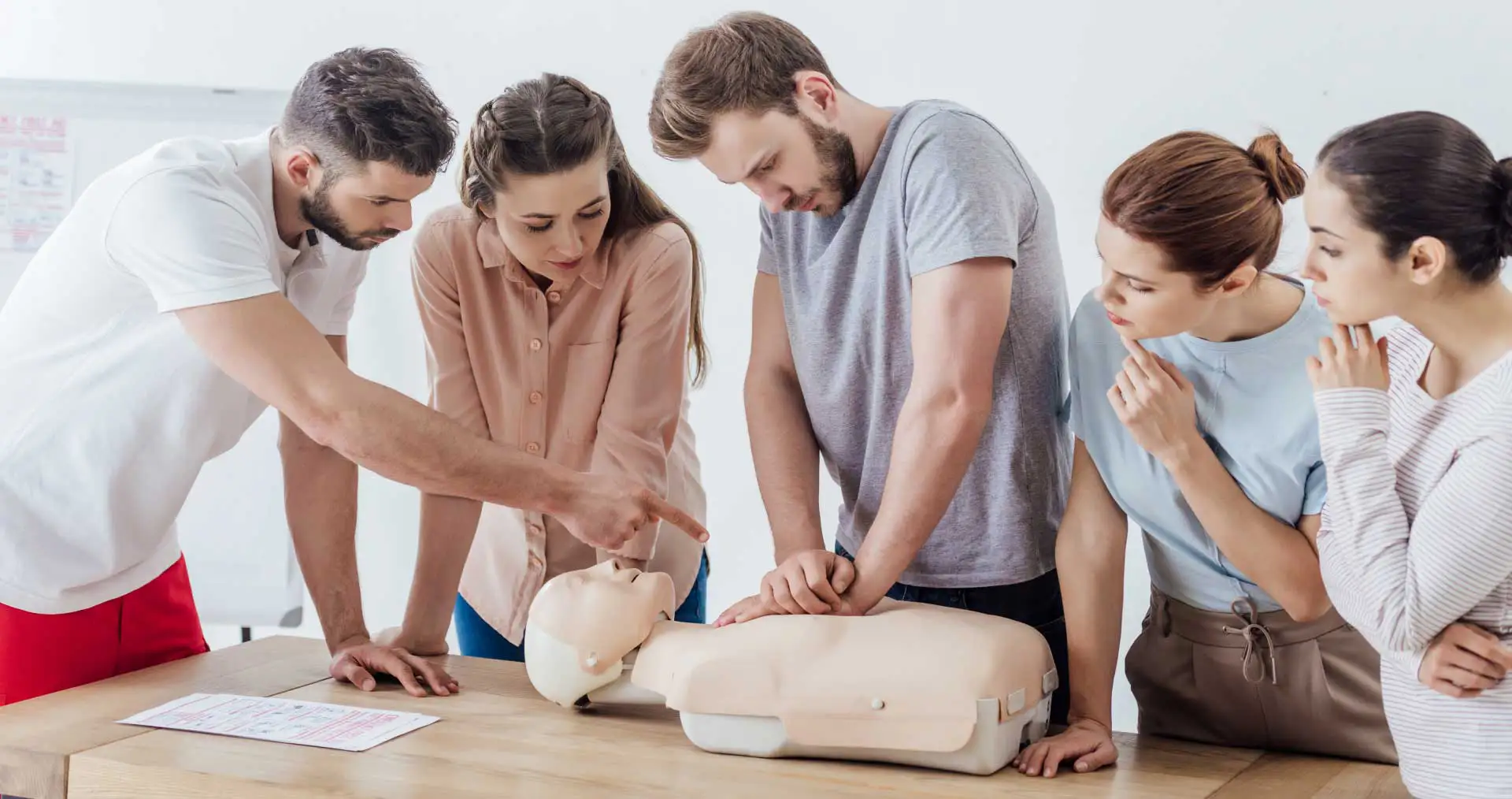
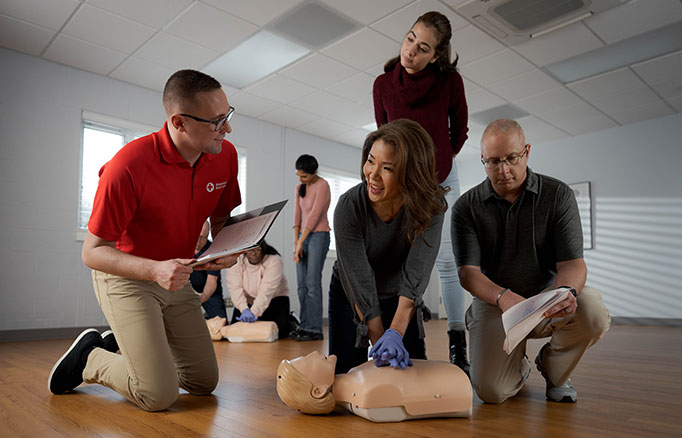
- Hands-on practice for training (using dummies)
- Affordable pricing
- Good reviews
- Impressive reputation
- Validity of the certificate
Did You Know?
CPR instructors directly impact awareness, knowledge, and practice of bystander CPR effectiveness, which, as a result, reportedly increases the chances of survival following a sudden cardiac arrest (SCA) by 49% to 74%.
(Source: American Heart Association Journals)
So, What Does That Teach You?
As is evident from the data, emergency situations can result in less tragic outcomes if there’s a significant population of Americans who are well-trained and well-versed in the timely administration of CPR. Undoubtedly, this can be possible with a systemic outcome of prevalence in enrollment in the CPR instructor trainer course in Dallas.
Though it’s a bonus if they also know how to use an AED.
Nonetheless, becoming an authentic CPR provider isn’t possible without an increase in the availability of BLS CPR instructors all across America. This can be made possible with individuals like you who aim to bring about a positive change in the world, while also contributing significantly to the stability of the healthcare system by improving the chances of survival for victims.
Administering CPR: Growing Need for People Who Know It
One can’t stress the need for finding the solution to an issue without people acting on it.
Entering the year 2026, recent statistics (published in Harvard Health) indicate a low record for people having adequate awareness of BLS and CPR, with only 18% being up to date with their training.
While the general public is well aware of the importance of CPR, only a small portion choose to enroll themselves in CPR certification courses, either as providers or even less as instructors.
You can hope that people stay healthy and get necessary medical attention on time, but this isn’t possible without the intervention of a bystander having the correct knowledge of CPR. Thus, ideation without implementation is just wishful thinking — a thought process that no one should normalize — further stressing the need for a CPR instructor trainer course in Dallas.
How a Recognized Training Clinic Can Help
Given that we live in a progressive era dominated by the internet, all kinds of information are available at your fingertips with just a tap on your phone. So, the problem isn’t about the availability of information. Rather, it’s about the authenticity of the training.
A recognized training clinic from a reputable organization, such as AHA or HSI, can help you with the following things:
- Legitimacy and authenticity of training
- Certified trainers
- Standard equipment and training
- Book-compliant training sessions and resources
- Feasible framework of course phases
Register Today for Training Classes
Considering the long-term benefits of being well-versed in a CPR instructor trainer course in Dallas, the duration is well-justified. The training of this practice efficiently makes you capable of training the general public, especially those who have an inclination towards saving lives by increasing the chances of survival.
To help yourself with a training that makes it worth the time and money, you need to make better decisions. This includes gaining insight from instructors who are reliable in the practice.
At CPR Training Clinic, our team of health instructors specializes in providing quality training for BLS instructors, BLS providers, Heartsaver instructors, and administering CPRAED first aid. Having trained over 100,000 participants, our organization is recognized by the American Heart Association (AHA), providing legitimate certificates for people who wish to bring a positive change in the world.
If you want to make an impact with your BLS skills, you can reach out to the CPR Training Clinic.
Contact us here.
FAQ’s
-
Is it hard to be a CPR instructor?
No, gaining training for becoming a CPR instructor isn’t generally considered a tough thing. However, it does require time, dedication, patience, and a quick-response attitude – which is essential for saving lives.
-
What’s the reason for not administering breaths during CPR?
There are many reasons concerning the health and safety of the CPR administrator and the victim. These are: (1) disease transmission, (2) risk of oxygen obstruction, and (3) preventing compression pauses (for consistent blood flow).
-
How long does a CPR certification remain valid?
Recognized by the American Heart Association, the CPR Training Clinic in Dallas offers CPR certification, which is valid for a period of two years, and can be renewed upon reaching the completion of tenure.
-
What to do if a person vomits during CPR?
If a person vomits during CPR, it’s important to turn them to their side (for clearing their airway). When the vomit stops, roll them back to a lying position and resume administering CPR.
-
Should I perform CPR if the victim has a pulse but isn’t breathing well?
Yes, it is strongly advised to perform CPR if a victim has a pulse but isn’t able to breathe properly. Start by placing them on their back, lifting their head (slightly), clearing their airway, and then continuing to perform CPR.